Imagine software used by several maintenance companies to track their technicians’ visits. An operations manager wants to download the month’s completed jobs and prepare her report in Excel. The development team gives this feature to an AI tool that can read and change source code. That is what this series means by a coding agent.
The AI adds a button and produces a CSV file, a data file that opens in a spreadsheet application. The download works. The team still needs to establish that the file contains every expected job, only records from the manager’s company, and only information she may access.
This gives the team a practical way to organize the project. It needs to decide which actions the AI may take independently and who checks the result before customers rely on it.
Describe what the feature needs to accomplish
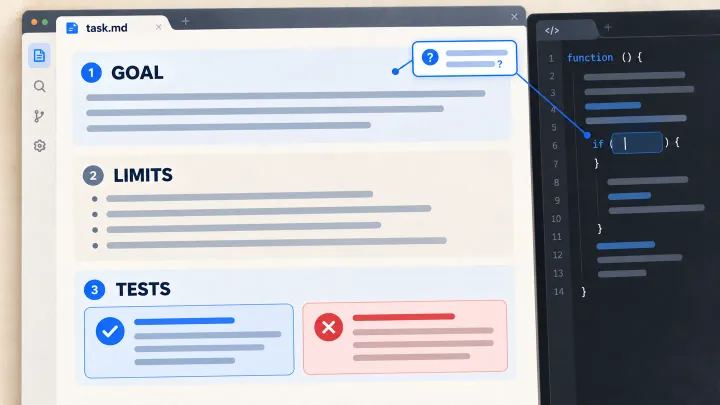
The manager wants to prepare her report without copying jobs one at a time. The team needs to agree on the reporting month, useful columns and treatment of jobs reopened after being marked complete. Those decisions change the file’s contents.
Permissions matter as much as the format. Several companies use this application, but their records must remain separate. A tidy file containing another company’s information is unacceptable. The product owner agrees on the rules with users; a developer or AI then implements them.
A nontechnical founder can contribute to this discussion. They can describe the manager’s work and review an example file with her. Engineering handles the implementation details. Moving from a demo to daily use requires connecting both kinds of judgment.
Separate the actions you delegate
Access to source code lets an AI prepare a change. Permission to release that change gives it additional authority. A team can allow the first action while reserving the second for a person or a configured release service.
| Work | Possible AI contribution | Decision to assign |
|---|---|---|
| Understand the request | Identify a missing rule and ask a precise question | Who decides what belongs in the report? |
| Build the feature | Edit a working copy and run tests | Which files and tools may it use? |
| Check the result | Run checks and present their results | Who selects essential cases and reviews failures? |
| Release the feature | Prepare or execute an authorized procedure | Who approves this particular version for customers? |
| Respond to a problem | Help investigate and propose a fix | Who can disable the feature and inform users? |
These responsibilities do not require five people or five agents. A small team can assign them within its current process. The important decisions should have owners before the work reaches them.
Inspect what the customer will receive
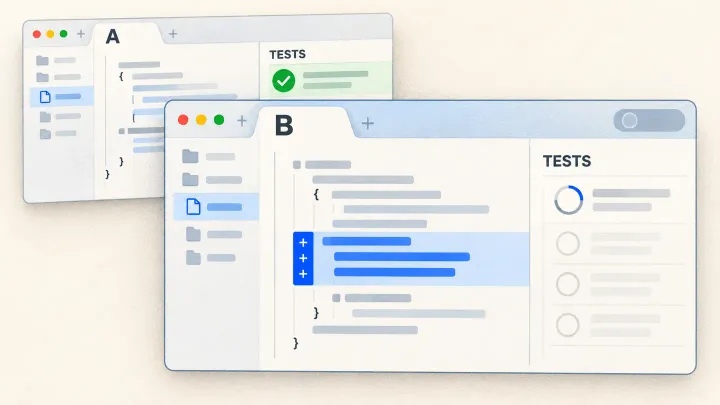
Before release, try the feature using fictional records from two companies. Inspect the file each company downloads. Also try retrieving a file with an account that should not have access.
The reviewer needs to know which software version was tested, what passed and what remains unchecked. A screenshot can show that the button is visible. Establishing that customer records stay separate requires examining file contents and rejected access attempts.
The technical setup needs to enforce these limits. For example, the coding AI can work without credentials for the live customer system. The release process can require approval of the version actually tested. NIST’s Secure Software Development Framework provides broader practices for organizing secure development.
Understand what a “dark factory” aims to do
In software, a dark factory aims to automate much of development and delivery. In its February 2026 account, StrongDM describes agents writing code and following scenarios without human code review. That account describes its experience, rather than an outcome every team can expect.
This series proposes granting more autonomy as a team learns to verify the work and recover from its effects. We call this approach “earned autonomy.” It may lead to automating one specific step or keeping human approval where it remains useful.
Start by examining a recent AI-assisted change and recording where people intervened. A missing business rule needs a decision. An application that will not start needs setup work. Results that are hard to review need a clearer presentation of checks. Those observations help determine the next improvement before adding agents or changing the software architecture.
Choose the next article for your situation
Was this article useful to you?
Your feedback goes privately to TechnoConception. No account or email is required.
How this feedback is handled
Responses expire after 90 days. They are not published or used as sales enquiries. A daily pseudonymous network identifier expires after 24 hours to limit abuse. Expired records are deleted by an hourly cleanup. The feedback database does not store your IP address; hosting security logs may still process it.
This browser stores only a receipt and your rating until the response expires, to reduce accidental duplicates. It does not store your comment or editing key. You can update a response during this page visit; after leaving, it becomes read-only in this browser.
Privacy policy